


Some weeks in AI move fast. This past week moved fast and got messy, which is honestly more interesting. A ninety year old math problem got “solved” in 88 hours, and within a day the whole thing turned into a credit dispute nobody saw coming. Let’s get into it.
OpenAI says its agents solved a $1 million math problem. The mathematicians who were already working on it disagree about how that happened.
On September 8, OpenAI announced that an unreleased internal model, running as a swarm of roughly 10,000 coordinating AI agents, had produced a proof addressing the Navier-Stokes existence and smoothness problem. This is one of seven Millennium Prize Problems set by the Clay Mathematics Institute in 2000, each carrying a $1 million reward. Only one of the seven, the Poincaré Conjecture, had ever been solved before this.
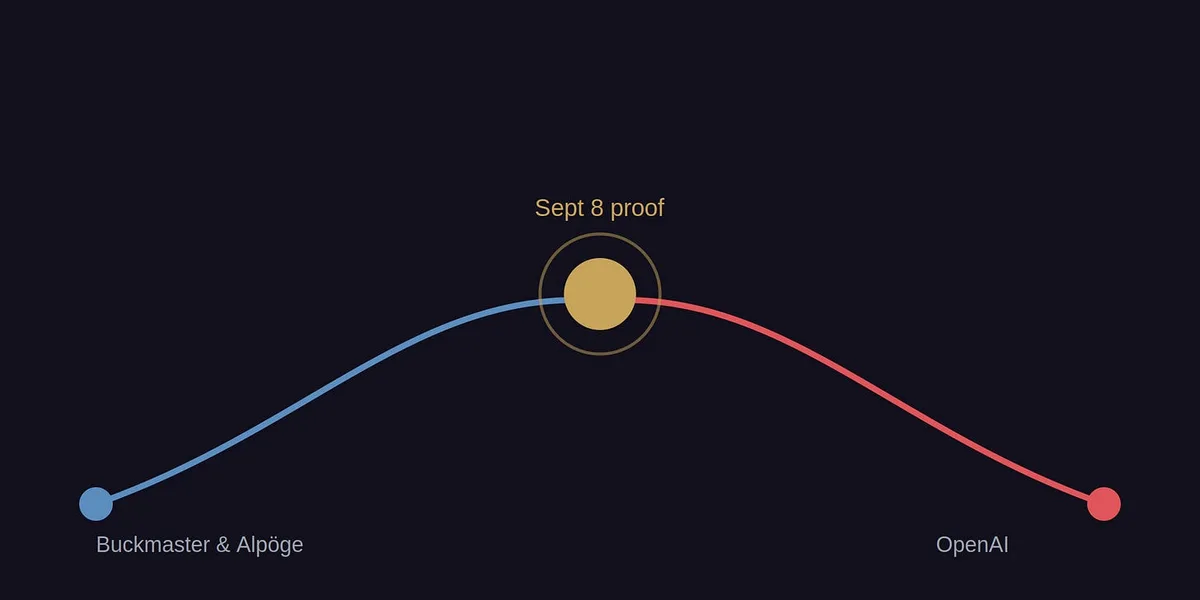
The numbers alone are worth sitting with. The agents started September 1 and reached a proposed solution by September 5, roughly 88 hours later. Across all the Millennium Problems they attempted simultaneously, they exchanged 4.9 million messages and generated around 300 billion output tokens. The Navier-Stokes work alone used 2.7 million of those messages. OpenAI published a 166 page proof along with a machine checkable Lean formalization, and stated plainly that it does not intend to claim the prize money.
Here’s where it gets complicated. NYU mathematician Tristan Buckmaster and Anthropic researcher Levent Alpöge had been working on closely related fluid equations for nearly a year, using publicly available models from both companies. Buckmaster says he learned on September 3 that details of their progress had reached OpenAI, and that OpenAI only started its own Navier-Stokes push after hearing rumors that two Millennium Problems might already be close to solved. He released his email exchanges with OpenAI staff to establish a public timeline, because he felt the record needed clarifying.
OpenAI’s response was measured. The company said it never accessed Buckmaster and Alpöge’s private research or their Codex conversation logs, called their concurrent work “remarkable,” and maintained that its own effort began independently on September 1. Both sides agree on one detail that makes this stranger: the approach both teams used traces back to earlier work by mathematicians Diego Córdoba and Luis Martínez-Zoroa, a promising but fairly niche direction that, according to Brown University’s Javier Gómez-Serrano, only a small circle of specialists were pursuing.
Nobody outside OpenAI has independently verified the proof yet. The Clay Mathematics Institute hasn’t commented.
Why this matters for builders: this is the first real test case of what happens when AI labs compete directly with the humans still doing the underlying research the AI was trained to help with. If your product touches any space where users generate valuable intellectual work through your tools, the Buckmaster situation is worth studying closely. The question of who owns insight that happens inside a chat interface is not going away.
Profound went from a $35 million round to a $1 billion valuation in eighteen months, and it says something about where marketing is headed
While the math world was arguing, a much quieter story kept compounding. Profound, a startup that helps brands figure out how they get represented inside AI chatbot answers, just raised a $180 million Series D led by Sequoia and Kleiner Perkins at a $1.8 billion valuation.
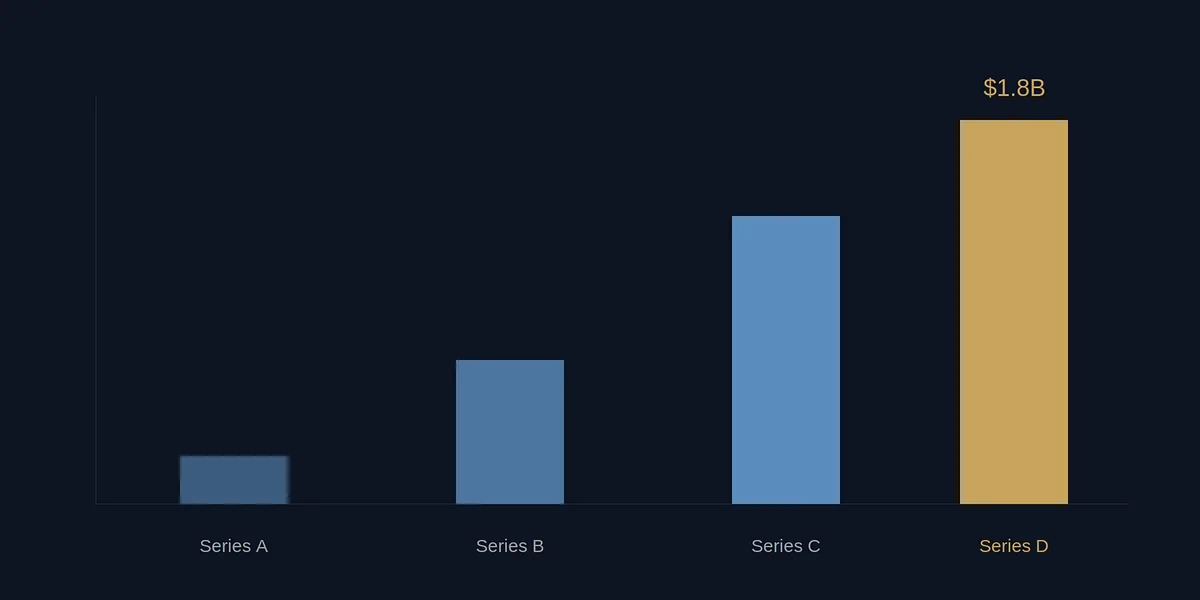
Rewind eighteen months and Profound didn’t exist as a company most people had heard of. It raised a $20 million Series A in mid 2025, a $35 million Series B that August, and a $96 million Series C in February of this year that pushed it past a $1 billion valuation with fewer than 120 employees. Its client list already included Ramp, Target, Figma, Walmart, MongoDB, and U.S. Bank. Now, seven months after crossing unicorn status, the valuation has nearly doubled again.
The premise is simple and a little unsettling if you run a business that depends on search traffic. As more people ask ChatGPT or Perplexity a question instead of typing it into Google, the old rules of SEO stop mattering as much as a new question: does the AI even know your brand exists, and does it describe you accurately when it answers. Profound built its entire business around measuring and influencing that.
Why this matters for builders: if you’ve spent years optimizing content for Google’s algorithm, you now have a second algorithm to think about, one that lives inside a chatbot and has no public ranking factors you can study. Companies solving discoverability inside AI answers early are going to have a real head start, and the fact that a category this narrow can raise $180 million in a single round tells you how seriously investors think this shift already is.
“You can’t develop without this tool”
“You can’t develop without this tool.”
That’s what one AI veteran told us about a certain company we cover in our 10 Best AI Stocks to Own in 2026 report.
Stock forecasters predict a 30%+ move higher by the end of 2026.
Click the link below and get this company’s name, plus 9 other AI leaders, for free today, before the list goes behind a paywall.
One more thing: Google quietly let its own engineers start using Claude, breaking a rule it never officially admitted existed
Business Insider reported this week that Google has opened up access to Claude Opus 5 for every engineer inside the company through its internal Antigravity IDE. That sounds like a minor infrastructure update until you understand what it breaks.
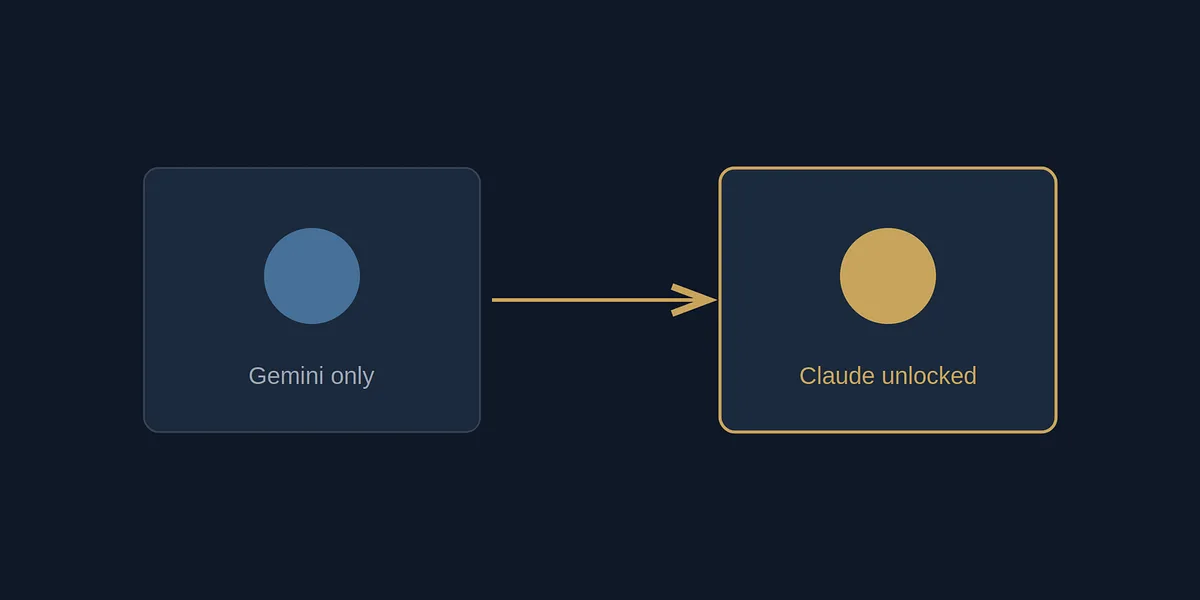
For a long stretch, Google staff operated under an unofficial expectation that they would use Gemini, the company’s own model, for internal coding work. Claude Code and OpenAI’s Codex were both effectively off limits in day to day workflows. Now that wall has quietly come down, and engineers can reach for whichever model actually gets the job done.
Google has never explained this shift publicly, and it likely never will in so many words. But the signal is loud on its own. A company that builds and sells its own frontier model just told its own engineers they’re free to use a competitor’s instead.
Why this matters for builders: internal tool mandates inside big tech companies are usually a lagging indicator of what leadership actually believes about model quality, not a leading one. When a company that has every incentive to keep its people inside its own ecosystem quietly stops enforcing that, it’s worth asking what its engineers were telling leadership behind closed doors.
That’s the issue. Stay sharp.
Builder Hustle