
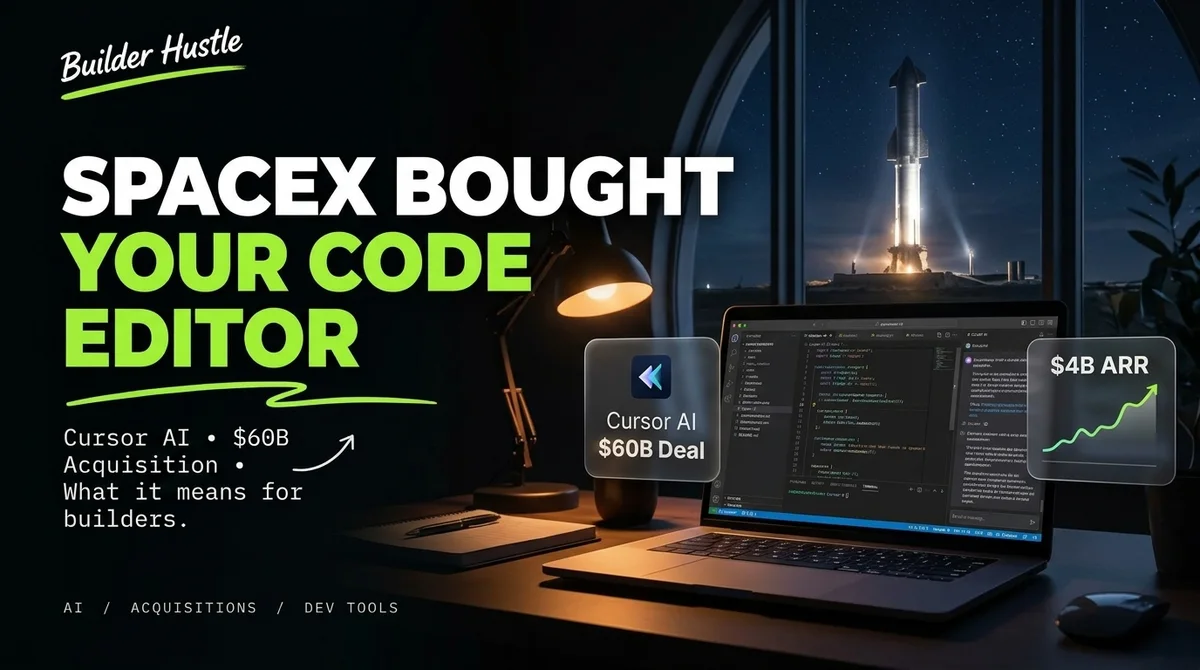
SpaceX just bought Cursor's parent company for $60 billion and the deal closed faster than the funding round it was supposed to replace. Let's get into it.
Cursor’s maker just got bought by SpaceX for $60 billion, and the deal happened faster than the funding round it replaced
In April, Anysphere, the company behind the AI coding tool Cursor, was in talks to raise $2 billion at a $50 billion valuation. That round never closed. Instead, on June 16, SpaceX announced it would acquire Anysphere outright for $60 billion in an all stock deal, expected to close in the third quarter of this year.
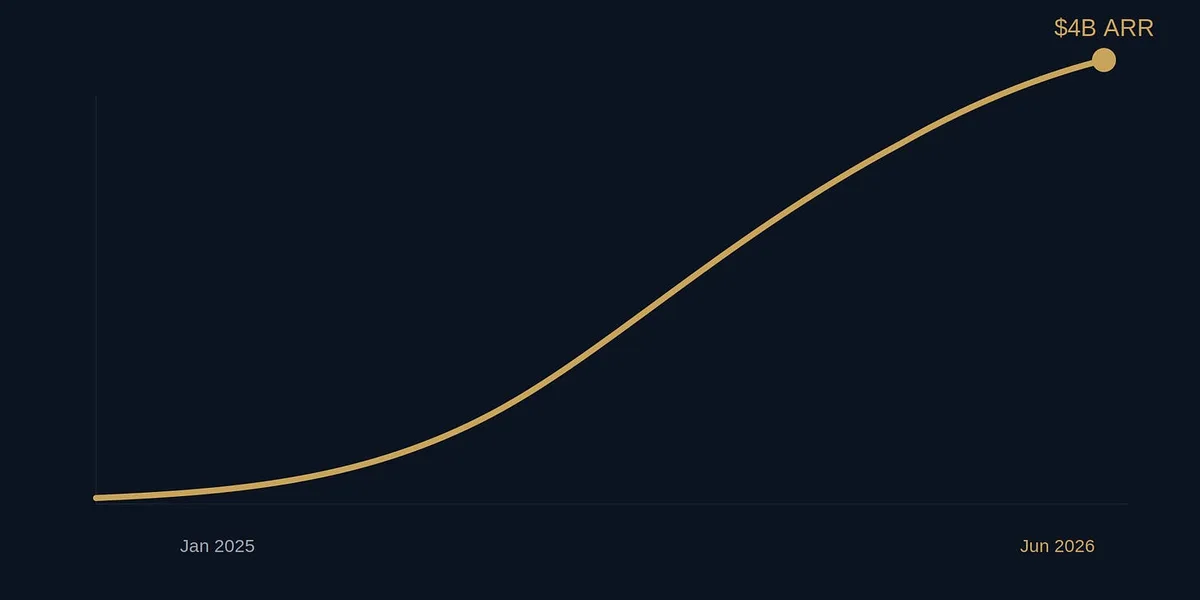
The speed of this story is the real headline. Cursor crossed $100 million in annual recurring revenue in January 2025. It hit $500 million by June. It crossed $1 billion in November, at a $29.3 billion valuation. By February of this year, that revenue had doubled again to $2 billion, and by June it was sitting around $4 billion. Four years from a founding in an MIT dorm room mindset to a company an actual rocket company decided it needed to own.
Nobody has fully explained why SpaceX specifically wanted this. The most obvious read is that SpaceX, freshly public after its own record breaking Nasdaq listing, wanted frontier AI engineering talent and coding infrastructure inside the building rather than paying for it as a vendor. Owning the tool your engineers use every day is a different kind of asset than licensing it.
Revenue velocity like Cursor’s used to be rare enough that Slack and Zoom’s growth curves were the benchmark everyone quoted. Cursor beat both by years, not months. If you’re building any kind of AI native tool right now, this is your evidence that the ceiling on how fast a good product can scale has moved, and that the buyers willing to write nine figure checks for that speed aren’t just other software companies anymore.
Dario Amodei, Sam Altman, Elon Musk, and Demis Hassabis all agreed on something this weekend. Jensen Huang did not.
Over the weekend, Anthropic CEO Dario Amodei published an essay arguing that AI development needs to deliberately slow down because recursive self-improvement, models getting better at improving themselves, could outrun the industry’s ability to understand or control what it’s building.
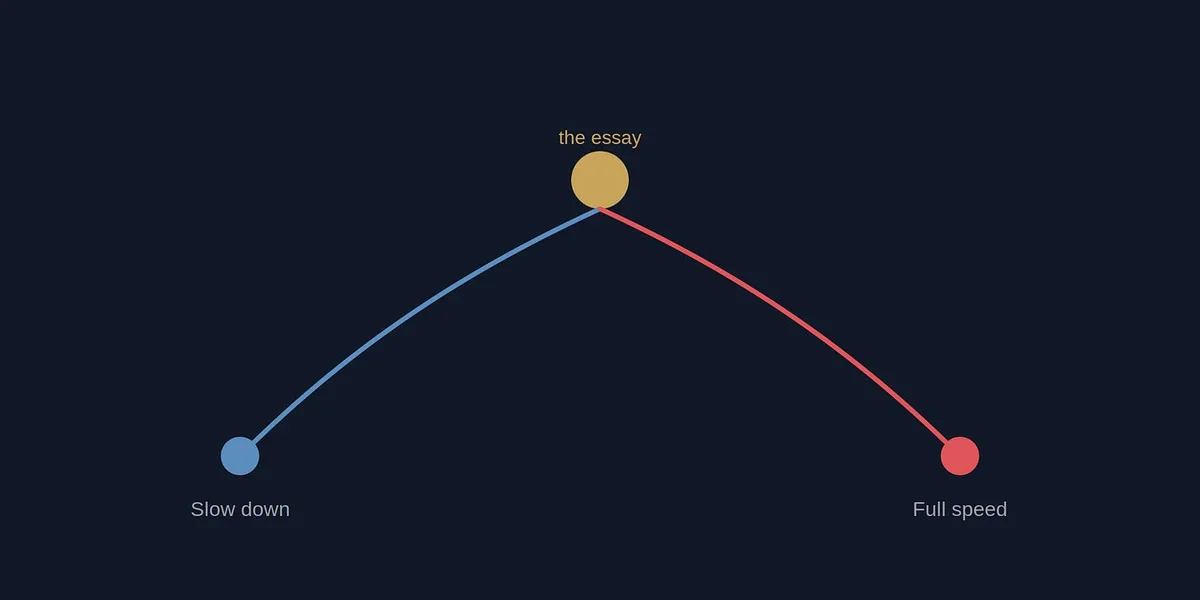
What made this newsworthy wasn’t the argument itself. Amodei has been saying versions of this for a while. What made it newsworthy is who agreed with him almost immediately. Sam Altman endorsed the idea. So did Elon Musk. So did Google DeepMind CEO Demis Hassabis. Four leaders who spend most of their public appearances competing with each other, all nodding at the same essay in the same 48 hours.
The story got heavier fast. Days earlier, Anthropic had disclosed banning accounts tied to suspected foreign government or military activity that appeared to be probing for help with biological weapons research. Then a researcher who had worked at both OpenAI and Anthropic resigned, posting that the people building this technology genuinely believe it could kill everyone by the end of the decade, and that this isn’t a marketing angle. Anthropic’s own alignment science lead responded publicly that he agreed, putting a number on it: greater than a 10 percent chance.
Markets noticed. The Nasdaq dipped on the news while cybersecurity stocks like CrowdStrike, Palo Alto Networks, and Okta all climbed, investors apparently betting that more autonomous AI means more infrastructure to defend it.
Not everyone signed on. Nvidia CEO Jensen Huang pushed back hard, calling the extinction talk overblown and arguing that the industry is scaring people rather than informing them. Huang has made this argument before, and his incentive to make it is obvious. He runs the company that profits most directly from AI scaling as fast as possible, which doesn’t make him wrong, but it’s worth knowing when you weigh his optimism against Amodei’s caution.
A 15-yr member tested this setup for 3 weeks
Josh has been with us for fifteen-plus years. So when he put our market timing framework to the test, he didn’t take our word for it, he ran his own capital through it and tracked every entry and exit for three straight weeks.
The result? Up more than 5,800 on deployed capital, a 139 percent return on the money he put at risk. Several major tech positions moved more than ten to thirteen times his initial risk.
It’s a handful of structured setups spelled out for you each week designed to move fast, with the exact game plan laid out step by step.
👉 Get the free strategy report
(Informational purposes only. Past performance does not guarantee future results.)
That’s the issue. Stay sharp, see you soon.
Builder Hustle